Small businesses often spend a lot of time and money trying to attract new customers. They run ads, post on social media, improve SEO, create offers, and compete for attention every day. But one of the most profitable growth opportunities is often already inside the business: existing customers.
First-party data marketing helps small businesses build stronger relationships with people who already know them. Instead of depending only on paid ads, rented audiences, or social media algorithms, businesses can collect customer information directly and use it to bring people back through email, SMS, and loyalty programs.
First-party data is information customers choose to share directly with your business, such as an email address, phone number, purchase history, birthday, preferences, appointment history, or loyalty activity. Google also describes first-party data as consented information that a business directly collects and owns, such as email addresses or phone numbers. (Google)
In 2026, this matters more than ever because small businesses need reliable ways to stay connected with customers. Email, SMS, and loyalty marketing help businesses reduce dependence on paid ads, improve repeat purchases, and create personalized customer experiences.
For small businesses that want a complete retention strategy, Jay Mehta Digital offers email marketing services and digital marketing services that connect customer data, content, automation, and performance tracking.
What Is First-Party Data Marketing?
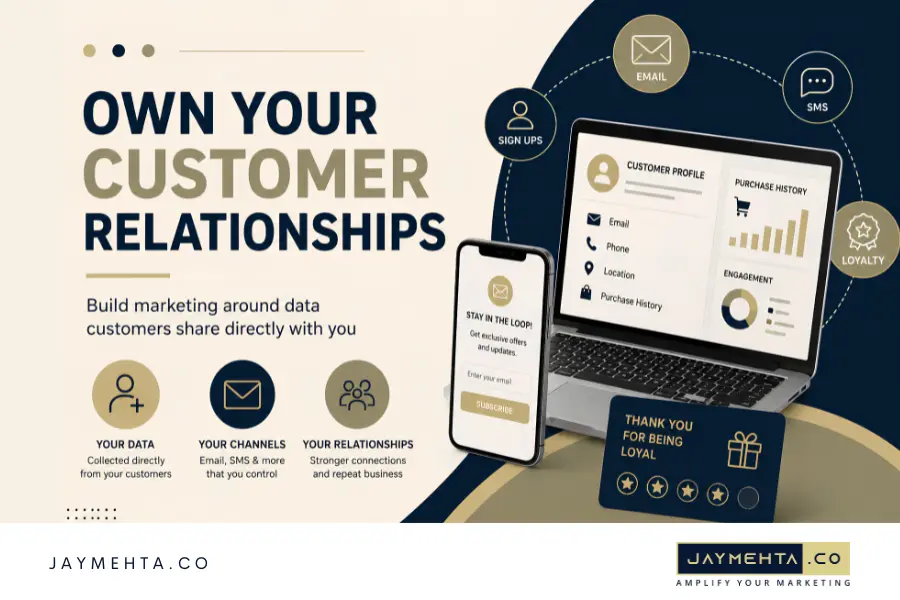
First-party data marketing is the practice of collecting, organizing, and using customer information that your business receives directly from customers. This can come from website forms, email signups, SMS opt-ins, purchases, bookings, loyalty programs, surveys, phone calls, events, and in-store visits.
Unlike third-party data, first-party data belongs to your business because it comes from your direct relationship with the customer. It is usually more accurate because it reflects real customer actions and preferences.
Why First-Party Data Matters for Small Businesses
First-party data matters because it helps small businesses understand who their customers are, what they buy, when they return, and what offers they respond to.
Small businesses can use first-party data to:
- Send personalized email campaigns
- Share SMS offers with interested customers
- Reward repeat buyers through loyalty programs
- Promote seasonal offers to the right audience
- Bring back inactive customers
- Improve customer experience
- Build stronger relationships without depending only on ads
- Increase repeat visits and repeat purchases
Google’s marketing guidance explains that first-party data can create a feedback loop when customers receive value in exchange for sharing information, helping both customers and brands benefit from future interactions. (Google)
Owned Data vs Rented Attention
Paid ads, search rankings, and social media reach are important, but they are not fully controlled by your business. Platforms can change algorithms, ad costs can rise, and organic reach can drop.
First-party data gives small businesses an owned communication channel. When someone joins your email list, signs up for SMS updates, or becomes a loyalty member, you can reach them directly with the right message.
Why Repeat Customers Are More Valuable
Repeat customers already trust your business. They have visited, purchased, booked, ordered, or shown interest before. That makes them easier to bring back than cold audiences who have never heard of you.
The Goal Is Retention, Not Just Reach
The goal of first-party data marketing is not only to collect contacts. The goal is to turn contacts into repeat customers through useful, timely, and relevant communication.
Why Small Businesses Should Focus on Customer Retention in 2026
Small businesses are facing more competition, higher advertising costs, and more crowded digital platforms. Attracting new customers is still important, but retention gives businesses a more stable growth path.
Customer retention means encouraging people to buy again, visit again, book again, order again, or stay connected with your brand.
Retention Helps Reduce Marketing Waste
When businesses only focus on new customers, they often spend more money than necessary. A strong customer retention system helps you get more value from the audience you already have.
For example:
- A restaurant can send lunch offers to past diners
- A salon can remind customers when it is time for their next appointment
- A gym can promote renewal offers to inactive members
- A boutique can send early access to loyal shoppers
- A dentist can remind patients about regular cleanings
- A home service company can send seasonal maintenance reminders
These campaigns are more targeted because they are based on real customer relationships.
First-Party Data Supports Personalization
Personalization is one of the biggest advantages of first-party data marketing. Instead of sending the same message to everyone, businesses can send more relevant messages based on customer behavior.
For example:
- New customers receive a welcome offer
- Loyal customers receive VIP rewards
- Inactive customers receive a comeback offer
- Birthday customers receive a special discount
- Restaurant customers receive offers based on past orders
- Service customers receive reminders based on booking history
Related Blog: Google First-Party Data Solution
Email Marketing: The Foundation of First-Party Data Marketing
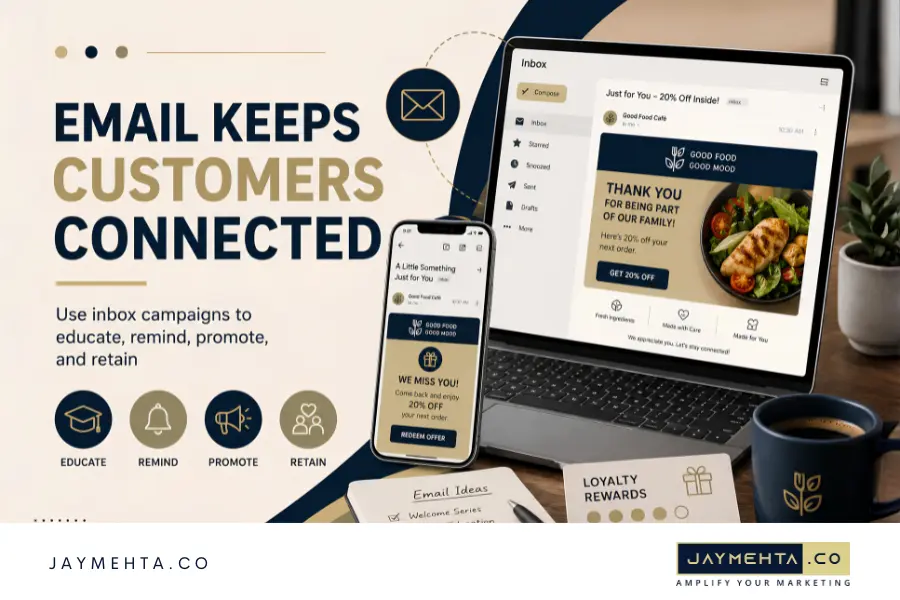
Email marketing is one of the most reliable ways small businesses can use first-party data. It gives businesses a direct way to communicate with customers without depending fully on social media algorithms or paid ads.
Mailchimp positions email and SMS automation as tools that can help small businesses grow without needing a large marketing team, which makes them especially useful for lean businesses. (Mailchimp)
What Small Businesses Should Send by Email
Small businesses should send emails that are useful, timely, and connected to customer needs.
Good email campaign ideas include:
- Welcome emails for new subscribers
- Thank-you emails after a purchase
- Monthly newsletters
- Seasonal offers
- New product announcements
- Event invitations
- Appointment reminders
- Educational tips
- Customer success stories
- Loyalty program updates
- Win-back campaigns for inactive customers
Segment Your Email List
Segmentation means dividing your email list into smaller groups based on customer behavior or preferences.
Useful segments include:
- New customers
- Repeat customers
- High-value customers
- Inactive customers
- Birthday or anniversary customers
- Customers by location
- Customers by product interest
- Customers by purchase history
- Customers by service type
Segmentation helps businesses avoid generic messaging and send campaigns that feel more personal.
Automate Important Customer Touchpoints
Email automation helps small businesses stay consistent without manually sending every message.
Useful automations include:
- Welcome series
- Abandoned cart emails
- Post-purchase follow-ups
- Review requests
- Appointment reminders
- Loyalty reward updates
- Birthday offers
- Re-engagement emails
For hands-on support, Jay Mehta Digital provides email campaign management and email automation drip campaign services.
SMS Marketing: Fast, Direct, and Action-Focused
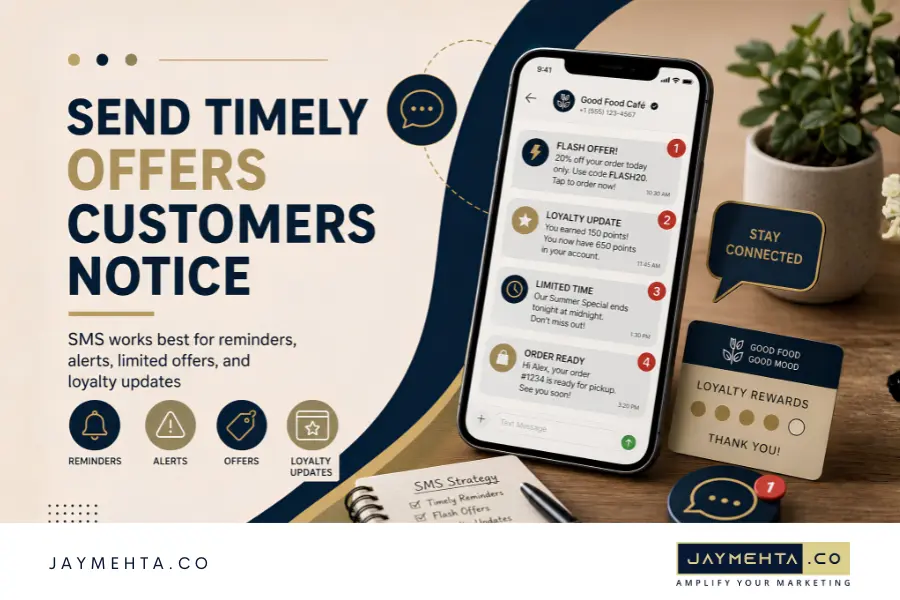
SMS marketing is powerful because text messages are quick and direct. Customers usually see SMS messages faster than emails, which makes SMS useful for urgent offers, reminders, and time-sensitive updates.
Mailchimp’s 2026 SMS marketing guidance notes that both large and small businesses can use SMS to reach customers quickly and personally. (Mailchimp)
Best Uses of SMS for Small Businesses
SMS should be used carefully. It works best when the message is short, useful, and timely.
Good SMS campaign ideas include:
- Flash sale alerts
- Appointment reminders
- Table booking confirmations
- Loyalty reward updates
- Limited-time offers
- Order pickup updates
- Event reminders
- Back-in-stock alerts
- Birthday offers
- Last-minute openings
- Weekend specials
Keep SMS Messages Short and Clear
A good SMS should answer three questions:
- What is the offer or message?
- Why should the customer care?
- What should they do next?
Example:
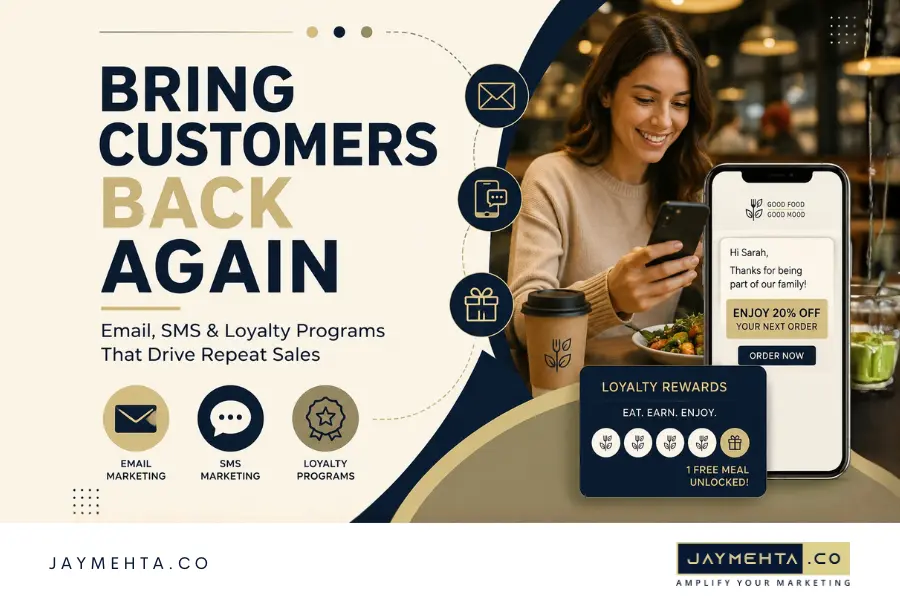
“Hi Sarah, your 20% birthday reward is ready. Use it this week at Jay’s Café. Show this text when you visit.”
Another example:
“Weekend special: Buy 1 pizza, get wings at 50% off. Today and tomorrow only. Order now.”
Get Proper Permission Before Sending SMS
SMS marketing requires clear permission from customers. Businesses should collect consent before sending marketing messages and make it easy for customers to opt out.
Businesses should consult legal guidance for SMS compliance. In the U.S., TCPA rules require prior express written consent for marketing text messages, and businesses should follow proper opt-out practices. (BCLP)
Useful Resource: Email List Building and Segmentation
Loyalty Marketing for Small Business
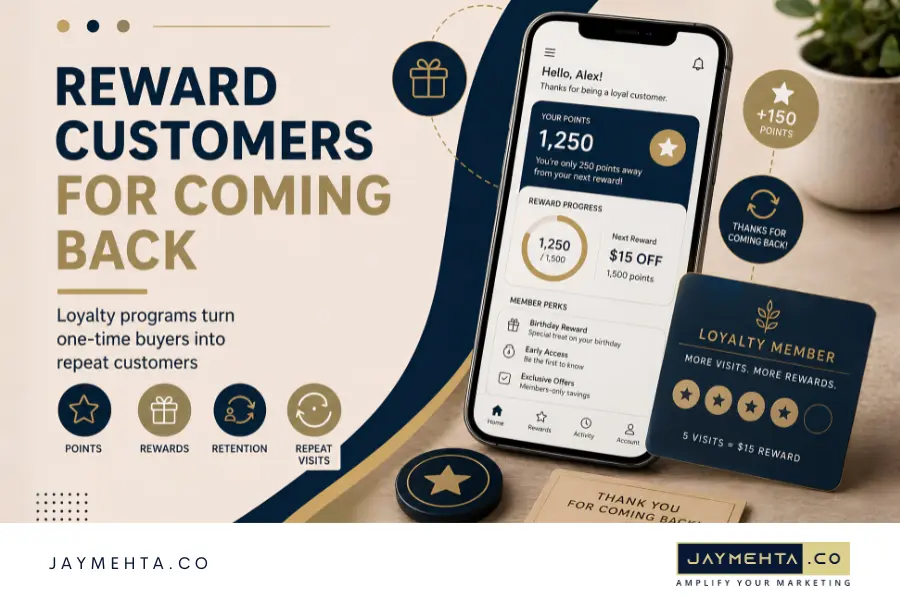
Loyalty marketing for small business focuses on rewarding customers for repeat purchases, visits, bookings, referrals, or engagement. It gives customers a reason to come back instead of choosing a competitor.
For restaurants, salons, fitness studios, retail stores, clinics, and service businesses, loyalty programs can be a simple but powerful retention tool.
Types of Loyalty Programs Small Businesses Can Use
Small businesses can use different loyalty structures depending on the business model.
Examples include:
- Points-based rewards
- Visit-based rewards
- Punch card programs
- Birthday rewards
- Referral rewards
- VIP customer clubs
- Tier-based loyalty levels
- Spend-based rewards
- Subscription-style memberships
- SMS loyalty rewards
Restaurant Loyalty Program Ideas
Restaurants can use loyalty programs to increase repeat visits and order frequency.
Ideas include:
- Free item after 10 visits
- Birthday dessert or discount
- Points for every order
- Double points during slow hours
- SMS-only lunch offers
- VIP tasting event invites
- Referral discount for bringing a friend
- Rewards for online ordering
- Catering loyalty credits
Restaurant loyalty works best when rewards are easy to understand and easy to redeem.
Loyalty Programs Should Feel Simple
Many loyalty programs fail because they are too complicated. Customers should instantly understand how to join, earn, and redeem.
A strong loyalty program should be:
- Easy to join
- Easy to track
- Easy to redeem
- Valuable enough to care about
- Connected to email or SMS
- Promoted in-store and online
- Measured regularly
Mailchimp’s SMS loyalty guidance also highlights that loyalty programs work better when rewards feel simple and do not require customers to use complicated systems. (Mailchimp)
How Email, SMS, and Loyalty Work Together
First-party data marketing is strongest when email, SMS, and loyalty programs work as one system.
Email is useful for storytelling, education, and regular updates. SMS is useful for fast action and reminders. Loyalty programs are useful for repeat behavior and customer appreciation.
Example Customer Journey
A simple customer journey could look like this:
- Customer visits a restaurant for the first time
- Staff invites them to join the loyalty program
- Customer enters email and phone number with permission
- They receive a welcome email
- A few days later, they receive an SMS lunch offer
- After another visit, they earn reward points
- On their birthday, they receive a special offer
- If they do not return for 60 days, they receive a comeback email
This system keeps the relationship alive after the first visit.
Build a Simple Retention Funnel
A small business retention funnel can include:
- Lead capture form
- Email signup offer
- SMS opt-in offer
- Loyalty program enrollment
- Welcome automation
- Repeat purchase reminders
- Review requests
- Win-back campaigns
- VIP offers
This helps small businesses move from random promotions to a structured retention system.
How to Collect First-Party Data the Right Way
Collecting first-party data should always be based on trust and value. Customers are more likely to share information when they understand what they will receive in return.
Give Customers a Clear Reason to Sign Up
Good signup incentives include:
- 10% off first order
- Birthday reward
- Loyalty points
- Early access to offers
- Free guide or checklist
- VIP event invites
- Appointment reminders
- Members-only specials
- Exclusive SMS discounts
The value exchange should be clear. Do not just ask people to “join our list.” Tell them why it benefits them.
Collect Data From Multiple Touchpoints
Small businesses can collect first-party data through:
- Website forms
- Popups
- Checkout pages
- Booking forms
- QR codes
- In-store signup cards
- Loyalty program forms
- Event registrations
- Lead magnets
- Online ordering systems
- Customer surveys
Keep Data Clean and Organized
Data is only useful if it is organized.
Small businesses should track:
- Customer name
- Email address
- Phone number
- Signup source
- Purchase history
- Visit frequency
- Preferences
- Birthday
- Location
- Last visit or purchase date
- Loyalty status
A good CRM, email platform, or marketing automation tool can help keep this information organized.
Related Blog: Ultimate Guide to CRM for Your Business Success
First-Party Data Marketing Metrics to Track
First-party data marketing should be measured. If you do not track results, you will not know which campaigns are bringing customers back.
Email Marketing Metrics
Track:
- Open rate
- Click-through rate
- Unsubscribe rate
- Conversion rate
- Revenue from email
- List growth
- Repeat purchase rate
- Inactive subscriber rate
SMS Marketing Metrics
Track:
- SMS opt-ins
- Click-through rate
- Redemption rate
- Opt-out rate
- Calls from SMS
- Bookings from SMS
- Revenue from SMS campaigns
Loyalty Program Metrics
Track:
- Loyalty signups
- Active members
- Repeat visits
- Reward redemptions
- Average order value
- Referral activity
- Customer lifetime value
- Win-back campaign results
For deeper reporting, Jay Mehta Digital also offers digital marketing analysis and email analytics reporting services.
Common Mistakes Small Businesses Should Avoid
Many businesses collect customer data but do not use it properly. Others send too many promotions and lose trust.
Mistakes That Hurt First-Party Data Marketing
Avoid these mistakes:
- Collecting emails without a follow-up plan
- Sending the same message to everyone
- Ignoring SMS consent requirements
- Sending too many text messages
- Not segmenting customers
- Making loyalty rewards too complicated
- Forgetting inactive customers
- Not tracking campaign results
- Using outdated customer lists
- Not connecting email, SMS, and loyalty together
A strong first-party data strategy should feel useful to customers, not annoying.
30-Day First-Party Data Marketing Action Plan
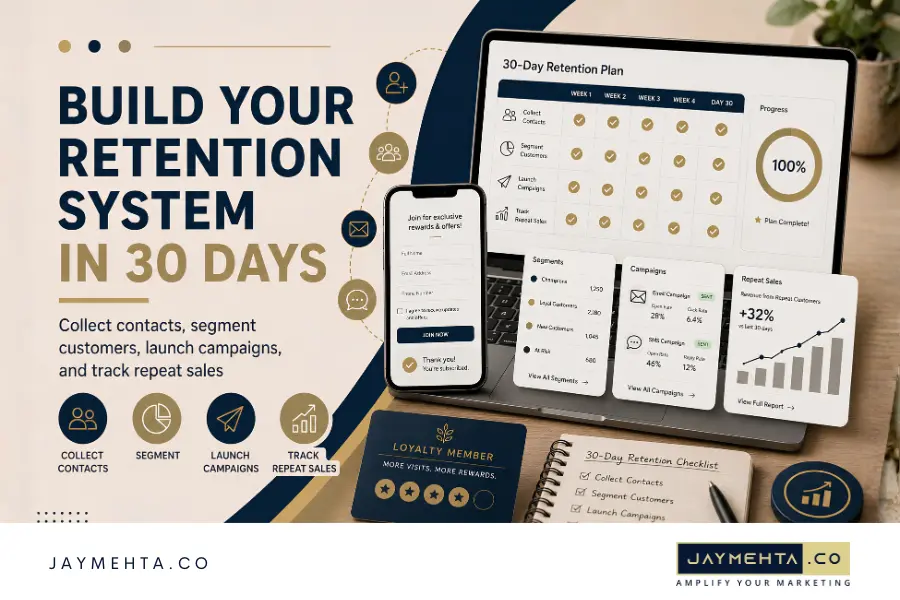
Small businesses do not need a complex system to start. Use this simple 30-day plan.
Week 1: Set the Foundation
- Choose your email and SMS platform
- Review your customer data sources
- Create signup forms
- Add website opt-in forms
- Create a simple loyalty offer
- Update privacy and consent language
Week 2: Build Your Lists
- Add QR codes in-store
- Promote email signup on your website
- Train staff to mention the loyalty program
- Add SMS opt-in at checkout
- Create a welcome offer
- Segment existing customers
Week 3: Launch Campaigns
- Send a welcome email
- Send one SMS offer
- Launch a loyalty reward
- Send a review request
- Promote your program on social media
- Add campaign links to your website
Week 4: Measure and Improve
- Review email opens and clicks
- Track SMS redemptions
- Monitor loyalty signups
- Identify repeat customers
- Check unsubscribes and opt-outs
- Improve your next campaign based on results
Conclusion: First-Party Data Helps Small Businesses Bring Customers Back
First-party data marketing gives small businesses a smarter way to grow. Instead of depending only on paid ads or social media reach, businesses can build direct relationships through email, SMS, and loyalty programs.
When customers share their email, phone number, preferences, purchase history, or loyalty activity, your business gains valuable insight. That insight can be used to send better offers, improve timing, personalize campaigns, and bring customers back more often.
Email helps you educate and stay connected. SMS helps you drive fast action. Loyalty programs reward repeat behavior. Together, they create a retention system that turns one-time customers into long-term customers.
How Jay Mehta Digital Can Help With First-Party Data Marketing
At Jay Mehta Digital, we help small businesses build marketing systems that attract customers and bring them back. Our team can help with email marketing, SMS strategy, customer segmentation, loyalty campaign planning, automation, content, analytics, and digital growth strategy.
If your business wants to use first-party data marketing to increase repeat sales, customer loyalty, and long-term revenue, Jay Mehta Digital can help you build a practical strategy.
Start with Jay Mehta Digital’s email marketing services or meet with Jay to discuss your customer retention plan.