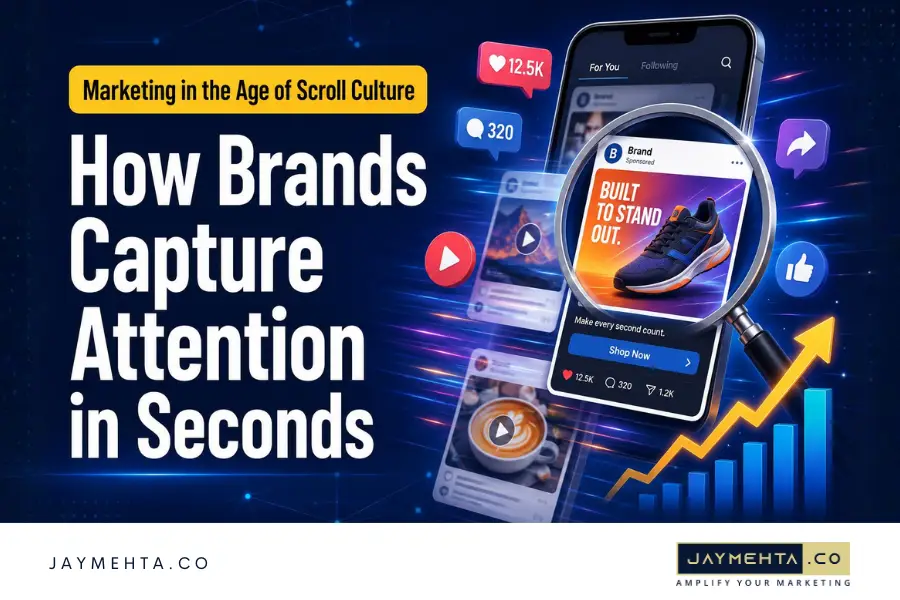
Marketing in the Age of Scroll Culture is not about shouting louder. It is about earning attention faster. In today’s digital world, attention spans are shorter than ever. Users scroll through hundreds of pieces of content daily across platforms like Instagram, TikTok, YouTube, and LinkedIn, making it harder for brands to stop users mid-scroll.
Redroc Advertising explains scroll culture as a world where entertainment decisions happen while people are on the couch, in the car line, or scrolling late at night, and they note that fast, emotional, relatable content is what wins attention. Their reference also highlights that users often decide in the first one or two seconds whether to stop scrolling.
This is why brands need a smarter digital strategy. A beautiful post is not enough. A clever caption is not enough. A viral trend is not enough. Your brand needs content that stops the scroll, tells a clear story, builds trust, and moves people toward action.
Also Check: Digital Marketing Services
Why Marketing in the Age of Scroll Culture Matters
Social media is no longer a side channel. DataReportal’s 2026 mid-year report says active social media user identities reached 5.79 billion globally by April 2026, equal to 69.9 percent of the world’s population. It also reports that 39.3 percent of adult social media users say they use social media to fill spare time. That means brands are not only competing with competitors. They are competing with memes, creators, news, friends, entertainment, and endless distractions.
A strong Marketing in the Age of Scroll Culture strategy helps businesses communicate faster without becoming shallow. The goal is not to make every post loud, funny, or trendy. The goal is to make every message easy to understand, emotionally clear, and worth pausing for. Research from Think with Google shows viewers decide very quickly whether content is worth their attention.
For a business, this matters because attention is now the first conversion. Before someone clicks, calls, books, subscribes, or buys, they must stop long enough to care.
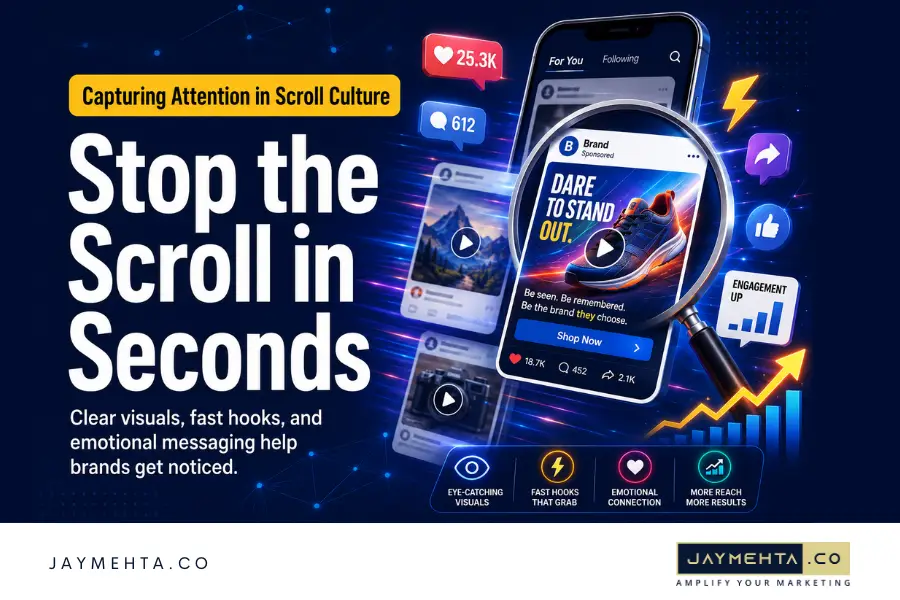
The First 3 Seconds Decide Everything
In traditional marketing, brands had more time to explain. In scroll culture, the first few seconds decide whether the message lives or disappears. That means the hook matters more than ever.
A good hook can be visual, emotional, educational, or curiosity-driven. Examples include:
- A bold before-and-after transformation
- A surprising customer problem
- A quick behind-the-scenes moment
- A strong question
- A short myth-busting statement
- A real reaction
- A quick tip that solves one pain point
Redroc’s reference mentions short clips, before-and-after reveals, real reactions, behind-the-scenes content, and employee takeovers as examples of what works in scroll culture.
For brands, the lesson is simple: do not start with a slow intro. Start with the reason someone should care.
Also Check: Social Media Marketing Services
Authentic Content Beats Overproduced Content
High-quality production still matters for launches, campaigns, ads, brand films, and website assets. But daily content does not always need to look like a commercial. In fact, overproduced content can sometimes feel too polished for social feeds.
People want content that feels real. They want to see the team, the process, the result, the customer experience, and the human side of the brand. Redroc also points out that scroll culture audiences value connection over perfection, while raw and simple content can feel more human and shareable.
This is a major part of Marketing in the Age of Scroll Culture. Businesses must stop treating every post like a billboard and start treating content like a conversation. Platforms like Canva and Adobe Express have also made rapid visual content creation easier for businesses.
For example, a restaurant can show food being prepared. A contractor can show a project before and after. A consultant can share one useful tip from a client problem. A local service business can show a real team member explaining what customers usually ask.
Explore: Content Creation Services
Use the Hero, Hub, and Help Content Model
One of the smartest ways to plan Marketing in the Age of Scroll Culture is to organize content into three buckets: Hero, Hub, and Help.
Hero Content
Hero content is your big campaign content. This includes launch videos, brand stories, seasonal campaigns, major announcements, and high-production creative. It is used when the brand needs a larger moment.
Hub Content
Hub content is consistent content that builds your brand personality over time. This includes weekly social posts, recurring reels, team updates, customer stories, educational carousels, and niche-specific content themes.
Help Content
Help content answers quick questions and solves small problems. This includes FAQs, how-to videos, short tips, checklists, comparison posts, and helpful blog snippets.
Redroc also highlights this model, explaining that hero content supports major campaigns, hub content builds the story over time, and help content is quick, useful, and made for social feeds. Tools like Google Trends and Meta Business Suite help businesses analyze audience behavior and trending topics.
For Jay Mehta’s audience, this model works well because it connects content marketing, social media, SEO, and paid advertising into one system.
Also Check: Content Marketing Services
Short-Form Video Is the Main Attention Tool
Short-form video is one of the strongest formats for scroll culture because it delivers movement, personality, and information quickly. But brands should not post video just because everyone else is posting video.
Every video should have a purpose. It should educate, entertain, show proof, answer a question, introduce a product, or create trust.
A strong short-form video structure looks like this:
- Hook in the first 1 to 3 seconds
- One clear idea
- Fast visual movement
- Simple on-screen text
- Natural voice or caption
- Clear next step
- Brand mention without forcing it
A weak video tries to say too much. A strong video makes one point clearly.
This is where Social Media Platform Selection & Optimization becomes important. The same idea may need a different format for Instagram Reels, TikTok, YouTube Shorts, LinkedIn, and Facebook.

SEO Still Matters in Scroll Culture
Many brands think scroll culture only applies to social media. That is a mistake. Search behavior is also changing. People skim Google results, AI summaries, website pages, blog posts, and landing pages quickly.
Your website content must be built for scanners and search engines at the same time. That means:
- Clear headlines
- Short paragraphs
- Strong intro copy
- Useful subheadings
- Internal links
- FAQs
- Helpful visuals
- Fast-loading pages
- Strong CTAs
Marketing in the Age of Scroll Culture should not ignore SEO. Social media can create attention, but SEO captures demand. Social posts help people discover you. Search-optimized content helps people find you when they are actively looking for answers.
Explore: SEO Services
Community Turns Attention Into Trust
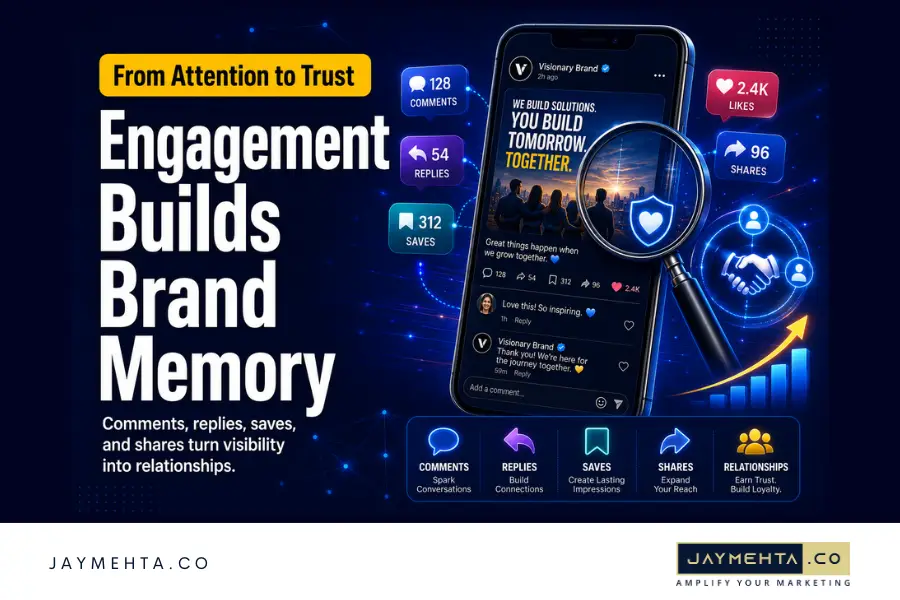
Getting attention is only the beginning. The real value comes when people start recognizing, engaging with, and trusting the brand.
That is why community management matters. Brands should reply to comments, answer questions, encourage user-generated content, repost customer stories, and create conversations instead of only publishing posts.
In scroll culture, people remember brands that feel active and responsive. If someone comments on a post and the brand never replies, the conversation ends. If the brand responds with personality and helpfulness, the relationship starts.
Also Check: Community Management Services
Conclusion
Marketing in the Age of Scroll Culture is about more than quick videos and trendy posts. It is about understanding how people consume content now. They scroll fast, decide quickly, and trust brands that feel useful, human, and consistent.
The brands that win are not always the biggest. They are the clearest. They know how to hook attention, tell small stories, publish consistently, use short-form video, support content with SEO, and build real engagement.
Marketing in the Age of Scroll Culture rewards brands that can be fast without being shallow, creative without being confusing, and consistent without becoming repetitive.
If you are ready to build visibility & If your brand wants to grow in 2026, book a strategy session with Jay and get a plan built specifically for where your customers are searching right now. Stop creating content only to fill a calendar. Create content that earns a pause, builds trust, and gives people a reason to take the next step.