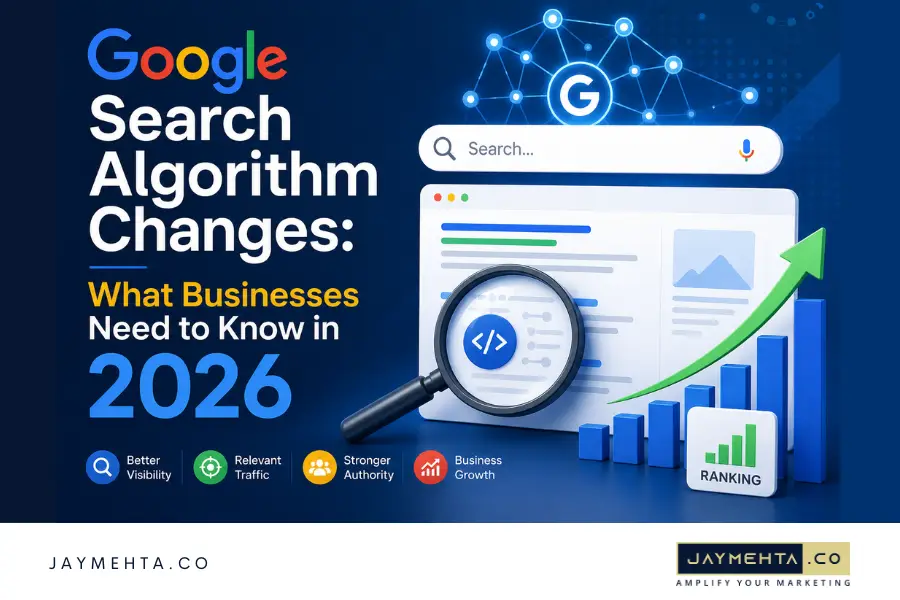
Google Search Algorithm Changes are no longer just small ranking shifts that SEO teams can check once a month.Google officially launched the May 2026 Core Update on May 21, 2026, and the rollout is expected to take around two weeks to fully complete. This update focuses heavily on AI-driven search experiences, content quality, trust signals, and topical authority. Businesses across SEO, ecommerce, SaaS, healthcare, and affiliate industries are already seeing major ranking fluctuations.
According to Google Search Central, core updates are designed to improve how Google evaluates overall content quality rather than targeting specific penalties.
What Google Search Algorithm Changes Mean for Businesses
Google Search Algorithm Changes usually affect how Google understands quality, relevance, trust, and usefulness. A page can lose visibility even if it has not broken any rule because another page may now satisfy the searcher better.
For business owners, the main lesson is clear. Google is not just asking, “Does this page mention the keyword?” It is asking, “Does this page solve the user’s problem better than the other results?”
That means your content must answer real questions, prove real experience, load quickly, be easy to navigate, and connect with the rest of your website. A service page with thin copy, no proof, no internal links, and no clear next step is much weaker in 2026 than a detailed page supported by FAQs, schema, reviews, case studies, and related content.
Also Check: AI-Powered SEO: 9 Key Principles for Next-Level Content Creation
The Biggest Ranking Shift: Helpful, Reliable, People-First Content
The biggest shift in Google Search Algorithm Changes is the movement away from generic SEO content and toward helpful, reliable, people-first content. Google says site owners should assess whether their content is helpful and reliable, especially after a large ranking drop.
This does not mean keywords are dead. It means keywords need context. If your target keyword is “roof repair,” Google wants more than a 700-word page that repeats the phrase. It wants service details, signs of roof damage, process steps, local proof, customer concerns, estimated timelines, and trustworthy answers.
Businesses should review every important page and ask:
- Does this page clearly answer the search intent?
- Does it show first-hand experience?
- Does it include updated information?
- Does it explain what the customer should do next?
- Does it link to related services or supporting resources?
If the answer is no, the page needs improvement.
AI Search Is Becoming the Default Experience
At Google I/O 2026, Google introduced major AI-powered search features including:
- AI Mode
- Gemini-integrated Search
- Conversational search experiences
- Expanded AI Overviews
- Agentic AI assistance
Google explained these changes in their official announcement on Google Blog – Search at I/O 2026.
This means search is shifting from:
- Traditional keyword-based queries
to - AI-assisted conversational answers
Example
Old search:
- “best SEO tools”
New search:
- “What are the best SEO tools for local businesses with small budgets?”
Businesses now need to optimize for:
- Conversational intent
- Topic depth
- Expert-level content
- Entity SEO
- AI citation visibility
AI Overviews and AI Mode Are Changing Search Visibility
AI Overviews and AI Mode are changing how people consume search results. Instead of clicking five websites, users may read an AI-generated answer first. Neil Patel’s 2026 algorithm guide highlights that AI Overviews have reshaped how content gets surfaced and that optimizing for AI citations requires a different approach than traditional SEO.
This does not mean businesses should stop doing SEO. It means SEO now needs to support both classic organic rankings and AI visibility. Your content should be structured clearly enough for Google to understand, quote, and trust.
Use direct answers, short explanatory paragraphs, FAQ sections, comparison tables, author information, updated dates, and schema markup where relevant. The goal is not to trick AI. The goal is to make your best information easy to verify.
Also Check: Mastering Voice Search SEO: Optimization Strategies for Voice Search
Spam Enforcement Is Getting Stricter
To stay safe through Google Search Algorithm Changes, businesses must avoid shortcuts that look manipulative. Google is not against AI-generated content itself, but low-quality automated content is being filtered more aggressively.
Google’s spam policies are available here: Google Spam Policies
The May 2026 update appears to evaluate:
- Originality
- Human editing
- Content usefulness
- Real-world experience
- Engagement quality
Businesses using AI should:
- Add expert insights
- Include real examples
- Update content regularly
- Improve readability
- Avoid publishing mass AI articles without review
Technical SEO Still Matters in 2026
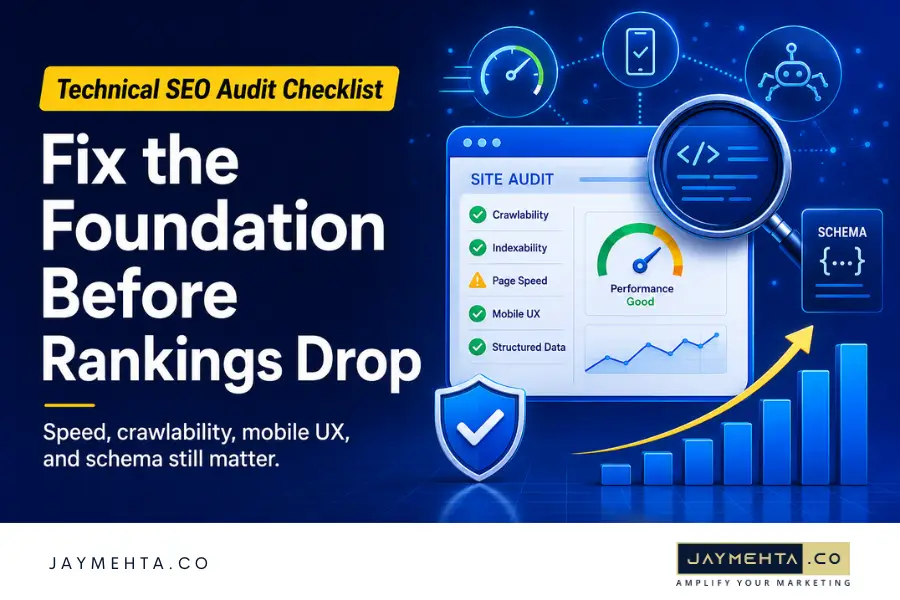
Content quality is important, but technical SEO is still the foundation. A great page cannot perform well if Google cannot crawl it, index it, or understand it properly.
After major updates, many businesses only check rankings. They should also check technical performance. Look for indexing issues, slow page speed, broken internal links, duplicate title tags, missing schema, poor mobile layout, and crawl errors.
Your technical checklist should include:
- Fast loading pages
- Mobile-friendly design
- Clean URL structure
- Proper internal linking
- XML sitemap updates
- Canonical tags
- Schema markup
- Optimized images
- Secure HTTPS setup
Need help checking these issues? Visit: SEO Analysis
Build Topical Authority, Not Random Blog Posts
One common mistake businesses make is publishing random blogs without a strategy. In 2026, Google needs to see that your website has depth around your core services.
For example, a law firm should not publish one blog about “personal injury lawyer” and then jump to unrelated marketing topics. It should create a complete content cluster around accident claims, insurance questions, injury timelines, settlement factors, local laws, and client FAQs.
The same applies to contractors, restaurants, medical clinics, ecommerce stores, and B2B companies. Your website should become a trusted resource in your niche.
A strong topical authority plan includes:
- Main service pages
- Supporting blog posts
- FAQs
- Case studies
- Local pages
- Internal links
- Author or expert review
- Updated content calendar
Explore: Content Marketing Services
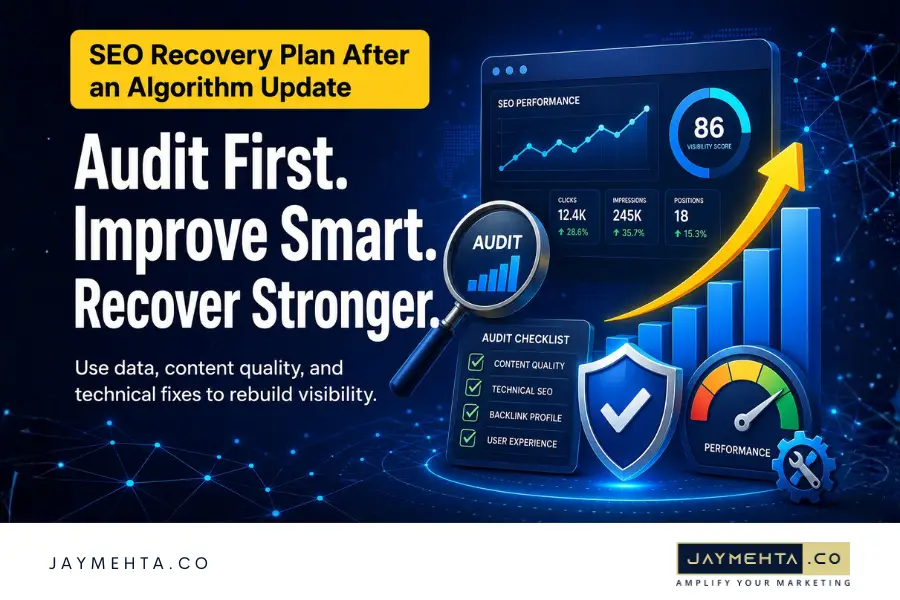
How Businesses Should Respond After an Update
1. Audit Low-Quality Content
Review:
- Thin blogs
- Duplicate pages
- Old AI-generated posts
- Weak service pages
- Outdated articles
Improve or remove underperforming content.
2. Strengthen Internal Linking
Internal links help:
- Pass authority
- Improve indexing
- Build topical relevance
- Increase engagement
Use contextual links between related articles and service pages.
3. Improve Technical SEO
Focus on:
- Mobile usability
- Fast loading speed
- Core Web Vitals
- Structured data
- Clean site architecture
You can monitor site performance using:
4. Build Brand Authority Beyond Google
Google increasingly trusts recognized brands.
Invest in:
- YouTube SEO
- LinkedIn content
- PR mentions
- Google Reviews
- Social media branding
- Email marketing
Strong branded searches help protect rankings during core updates.
Conclusion
The businesses that win after Google Search Algorithm Changes are not the ones chasing every rumor. They are the ones building useful content, strong technical foundations, real authority, better user experience, and a brand people trust.
In 2026, SEO is not just about ranking a page. It is about becoming the most reliable answer for your customer’s search. If your website is helpful, updated, technically strong, and supported by real expertise, every algorithm update becomes less of a threat and more of an opportunity.
If your business wants to stay visible through Google Search Algorithm Changes, start with a full SEO audit, improve your highest-value pages, and build a long-term content system that supports both organic search and AI-powered results. If you are serious about local search in 2026, connect with Jay’s team and build the system that helps you before your competitors do.