After two decades in digital marketing, I’ve seen thousands of businesses burn through ad budgets on Meta platforms without understanding why their campaigns aren’t delivering results. The problem isn’t usually a lack of effort,it’s a lack of systematic diagnosis.
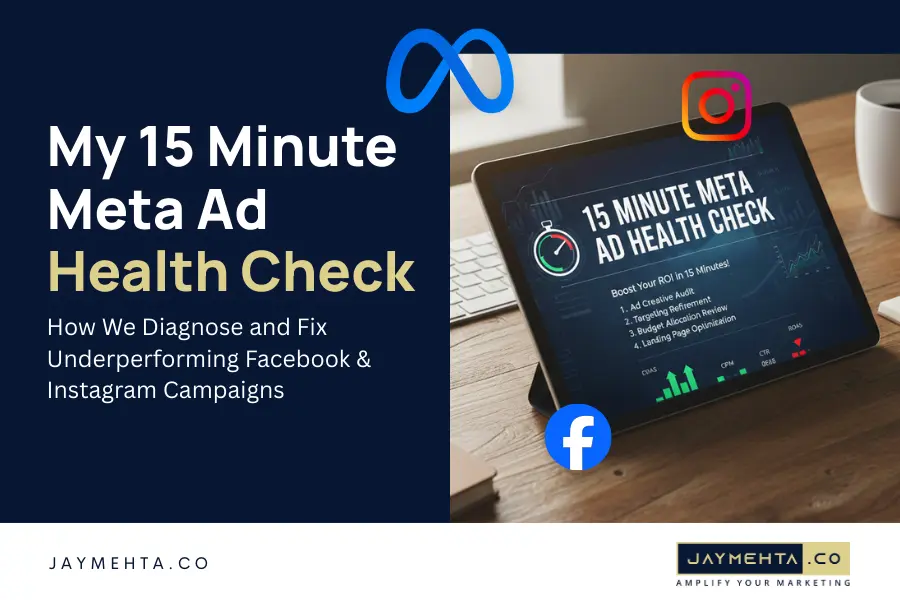
That’s why we developed our 15 Minute Meta Ad Health Check at Jay Mehta Digital. It’s a rapid assessment framework that identifies the critical issues plaguing your Facebook and Instagram ad campaigns in under 15 minutes, followed by actionable solutions that typically improve performance within days.
Why Most Meta Ad Audits Miss the Mark
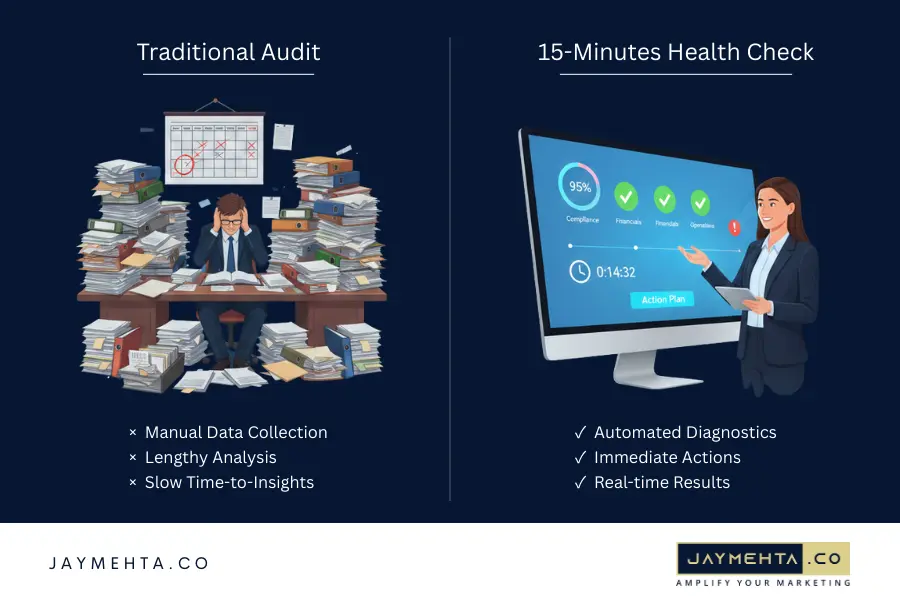
Traditional ad audits fall into two extremes. On one end, you have surface-level checks that barely scratch beneath the surface, verifying obvious things like whether your pixel is installed but missing the nuanced issues that actually drain your budget. On the other end, you have comprehensive audits that produce 200-page reports taking weeks to complete and months to implement. By the time you finish reading one of these encyclopedic documents, Meta has already changed its algorithm twice, and your competition has adapted while you’re still on page 47.
Neither approach serves businesses that need quick, actionable insights. Our One-Minute Health Check strikes the perfect balance: deep enough to identify real problems that are costing you money right now, fast enough to act on immediately while the opportunity is still fresh.
The Data Behind Why You Need Regular Meta Ad Health Checks
According to Meta’s own research, the average Facebook ad account wastes between 25-40% of its budget on inefficiencies that could be caught and corrected with proper monitoring. When you’re spending $10,000 per month, that’s up to $4,000 literally evaporating because of fixable issues. Over a year, that’s $48,000 in wasted spend.
The most alarming finding from our analysis of over 500 client accounts is that 76% of businesses don’t realize their tracking is broken until they’ve already lost weeks or months of valuable data. Imagine running ads for three months, thinking you’re making data-driven decisions, only to discover your conversion tracking was only capturing 60% of actual conversions. Every optimization you made was based on incomplete information, which means you were potentially optimizing in the wrong direction.
Another critical data point: Apart from adherence to Meta’s official advertising guidelines, the platform’s algorithm performs best when it receives consistent, high-quality data. Accounts with properly configured tracking and regular optimization see an average ROAS improvement of 2.3x compared to “set it and forget it” accounts. But here’s the catch, Meta’s platform evolves so rapidly that what was “properly configured” six months ago might now be considered outdated.
The speed of change on Meta is staggering. In 2024 alone, Meta rolled out significant updates to Advantage+ campaigns, modified how broad targeting works, changed recommendations around creative best practices, and adjusted attribution models. If you’re not checking your account health regularly, you’re essentially driving a race car while looking in the rearview mirror.
What We Examine in Our Health Check
1. Account Structure & Campaign Architecture
The foundation of any successful Meta advertising strategy is how your campaigns are organized. Think of your account structure like the foundation of a building, if it’s not solid, everything built on top of it will eventually crumble. We’re looking at whether your campaigns are organized for scalability, clear performance measurement, and efficient budget allocation.
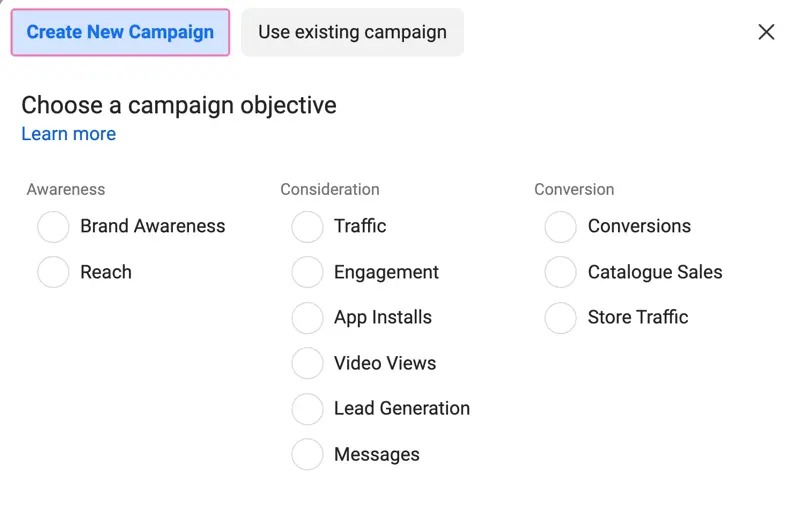
When we access your Ads Manager, the first thing we examine is campaign objective alignment with your actual business goals. I can’t tell you how many times I’ve seen businesses running Traffic campaigns when they actually need Conversions, or using Engagement objectives when their real goal is generating leads. Each objective tells Meta’s algorithm what to optimize for, so using the wrong one is like telling a taxi driver the wrong address and wondering why you end up in the wrong place. An expert team with timely campaign management and optimization reduces this risk for your business.
We then look at how your ad sets are segmented. Are you testing audiences properly, or are you running everything in one massive ad set hoping for the best? Proper segmentation allows you to understand what’s working and what isn’t. Without it, you’re flying blind. We also examine how your budget is distributed across campaigns. Often, we find businesses spreading their budget so thin across dozens of ad sets that none of them have enough fuel to exit Meta’s learning phase and actually perform.
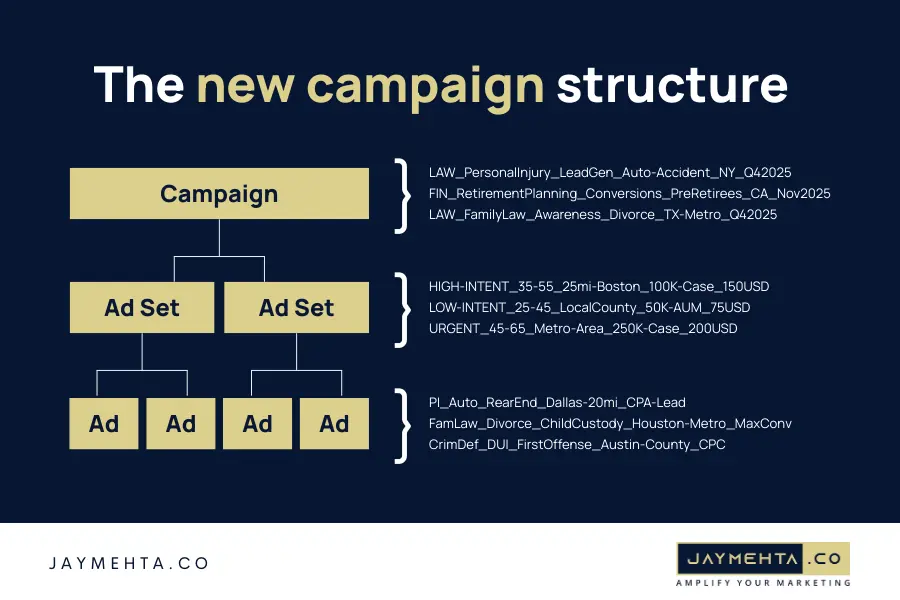
The naming conventions and organizational structure matter more than most people realize. When you have dozens of campaigns running, being able to quickly identify what each one is testing becomes critical. A clear naming system like “CONV_Warm_Retargeting_Video_Q4” tells you immediately what that campaign does. Compare that to “Campaign #47” and you can see why organization matters.
The naming conventions and organizational structure matter more than most people realize. When you have dozens of campaigns running, being able to quickly identify what each one is testing becomes critical. A clear naming system like “CONV_Warm_Retargeting_Video_Q4” tells you immediately what that campaign does, especially when setting up Facebook ads for financial advisors where defining target audiences, campaign objectives, and compliance considerations require meticulous organization. Similarly, when choosing your Facebook ad objective and budget for law firm facebook ad campaigns, a structured naming convention helps you track whether you’re optimizing for brand awareness, lead generation, or conversions across different practice areas. Compare that to “Campaign #47” and you can see why organization matters.
2. Tracking & Attribution Setup
This is where the rubber meets the road. Without proper tracking, every decision you make is based on incomplete or incorrect data. It’s like trying to navigate using a map where 30% of the roads are missing, you might eventually get where you’re going, but you’ll take a lot of wrong turns along the way.
We examine your Meta Pixel implementation first, checking not just whether it’s installed but whether it’s firing correctly on all the pages that matter. I’ve seen pixels installed on the homepage but missing from the checkout page, or firing on page load but not capturing button clicks. These seemingly small technical issues result in massive data gaps.
The Conversions API setup is critical in the post-iOS 14 world. Apple’s privacy changes decimated cookie-based tracking, which means if you’re only using the Meta Pixel, you’re losing between twenty and thirty percent of your conversion data. The Conversions API sends data directly from your server to Meta, bypassing browser limitations. When we find businesses running without it, we know they’re making ad-creation and optimization decisions based on severely incomplete information.
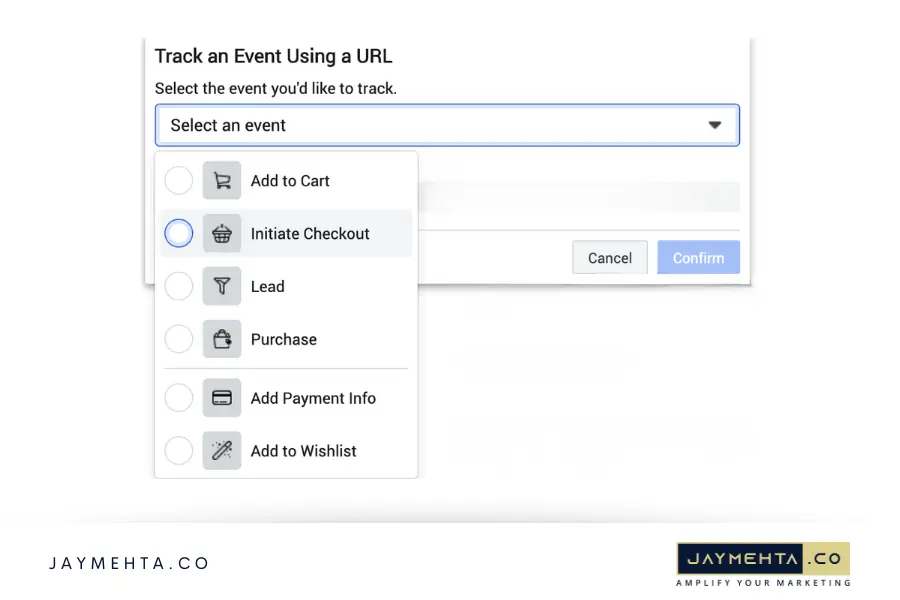
Event configuration is another area where we find critical issues. Are you tracking the right actions? Most businesses track purchases, which is good, but they’re not tracking micro-conversions like add-to-cart, initiate-checkout, or lead form submissions. These micro-conversions give Meta’s algorithm more data points to learn from, which improves performance. It’s the difference between giving the algorithm one data point per day versus ten data points per day to optimize against.
We also verify your attribution window settings and whether you’ve made the necessary iOS 14+ adjustments. Many businesses are still using attribution settings from 2019 that don’t reflect the current privacy landscape, which means they’re attributing conversions incorrectly and making budget decisions based on flawed logic.
The red flags we commonly encounter include pixels that are installed but not firing on key pages like the thank-you page or checkout completion page. Missing Conversions API implementation is present in about sixty percent of accounts we audit, which means those businesses are losing a massive chunk of their conversion data. Many businesses track purchases but completely ignore micro-conversions, which starves Meta’s algorithm of the learning data it needs. And proper UTM parameter structure is rare, which makes it nearly impossible to track campaign performance across multiple touchpoints.
3. Audience Targeting Strategy
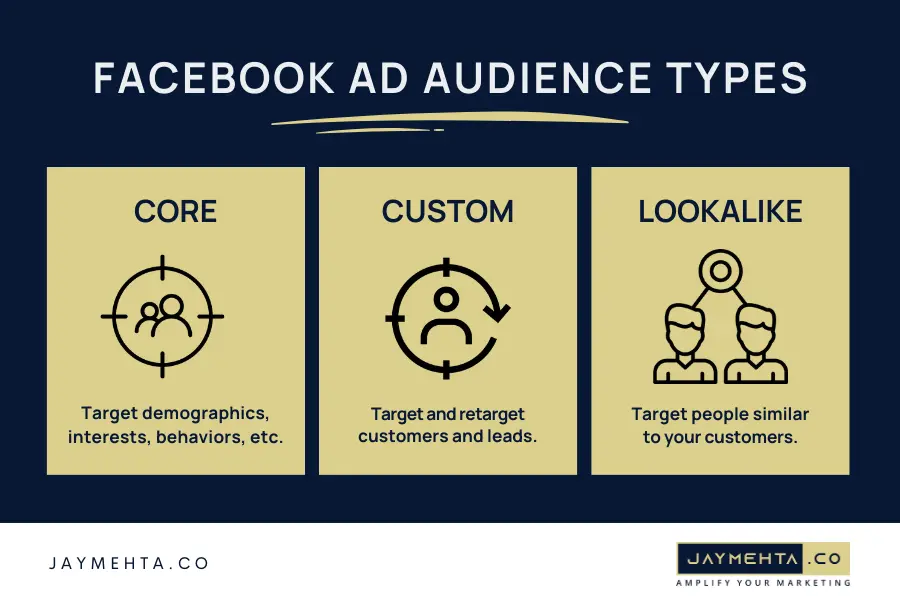
Your audience strategy can make or break your campaigns. Too broad and you’re wasting money on people who will never convert. Too narrow and you’re suffocating your campaigns by not giving them enough room to find your best customers. Getting this balance right is part science, part art, and it changes based on your budget, your goals, and your industry.
When we evaluate your audiences, we start by looking at audience size relative to your budget. There’s a mathematical relationship here that most people don’t understand. If you’re targeting an audience of 500,000 people with a daily budget of $50, you’re likely going to see great results initially, but you’ll hit a ceiling quickly as you saturate that audience. Conversely, if you’re targeting 50 million people with that same $50 budget, Meta’s algorithm doesn’t have enough budget to properly explore that massive audience and find your best customers. The sweet spot varies, but generally, you want your audience size to be large enough that you can spend your budget without exhausting it within a few weeks.
Audience overlap is a silent budget killer. When you have multiple ad sets targeting audiences with seventy or eighty percent overlap, those ad sets are essentially bidding against each other in Meta’s auction. You’re competing with yourself, driving up your own costs, and confusing the algorithm about which campaign should win the auction. Meta provides an overlap tool, but most advertisers never use it. We check this immediately because it’s one of the fastest ways to reduce costs without changing anything else about your campaigns.
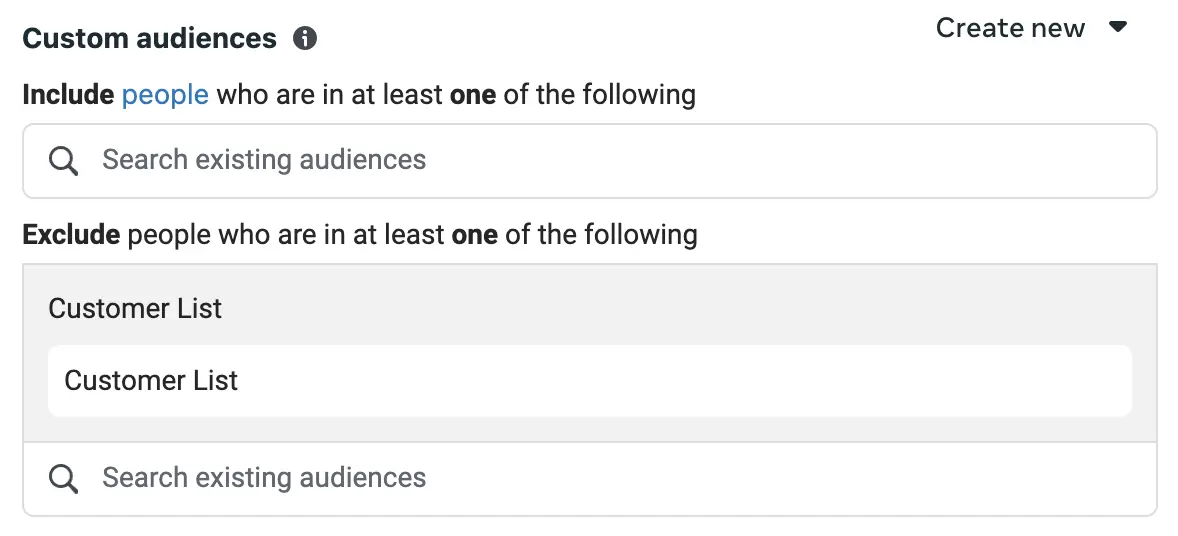
Exclusion lists are criminally underutilized. If you’re running acquisition campaigns to find new customers, but you’re not excluding people who already purchased from you, you’re paying to advertise to people who are already customers. This is like a restaurant owner paying for billboards to convince people who are already eating in their restaurant to come try their restaurant. It sounds absurd when stated plainly, but it happens in the majority of accounts we audit.
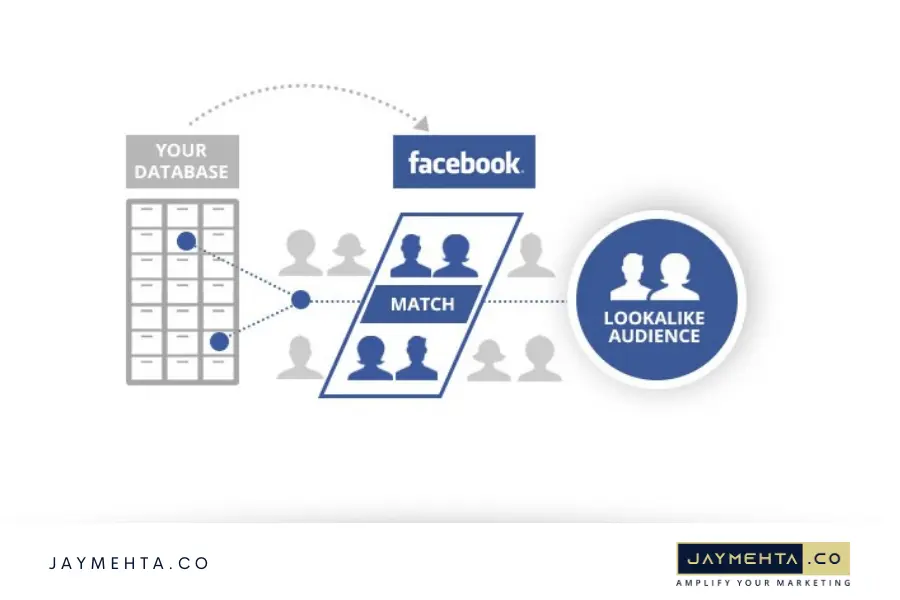
Lookalike audience quality depends entirely on the source audience you’re building them from. If you’re building lookalikes from a source audience of everyone who visited your website in the past two years, you’re including tire-kickers, competitors researching you, and people who accidentally clicked your ad. That lookalike will be mediocre at best. However, if you build lookalikes from your top twenty percent of customers by lifetime value, Meta’s algorithm can find people who look like your best customers. The difference in performance is dramatic.
Interest targeting relevance has become less critical as Meta’s algorithm has improved, but it still matters for campaigns that need more direction. The key is being specific enough to guide the algorithm without being so restrictive that you don’t allow it to find unconventional patterns. For example, if you sell premium hiking boots, targeting “hiking” is obvious. But you might also find great customers among people interested in “landscape photography” or “national parks” who you wouldn’t have thought to target without testing.
4. Creative Performance & Ad Fatigue
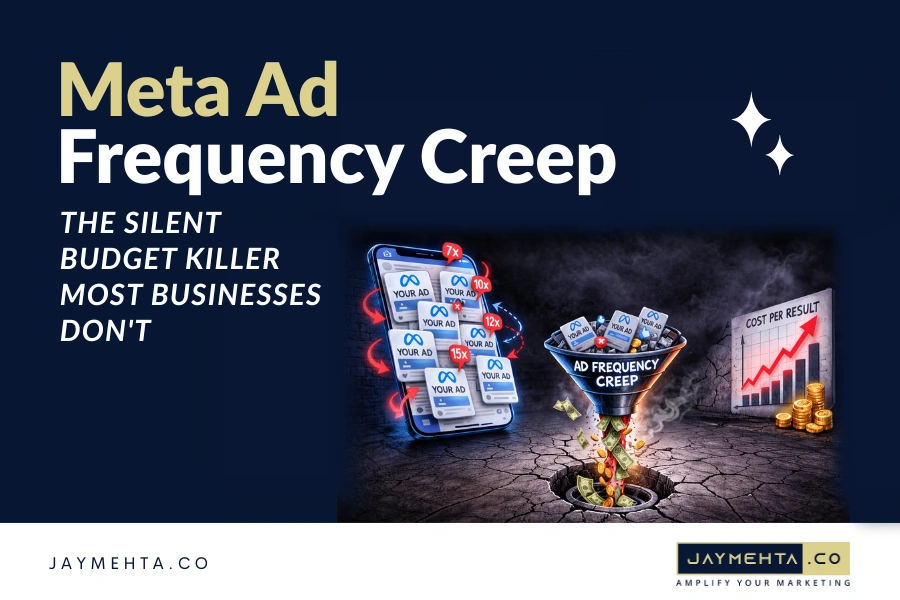
Creative fatigue is the silent killer of profitable campaigns. You launch a new ad, it performs brilliantly for two weeks, and then gradually, sometimes suddenly, performance falls off a cliff. Your cost per acquisition doubles or triples, and you’re left wondering what happened. What happened is simple: the people in your target audience saw your ad too many times, and they’re now scrolling past it without a second thought.
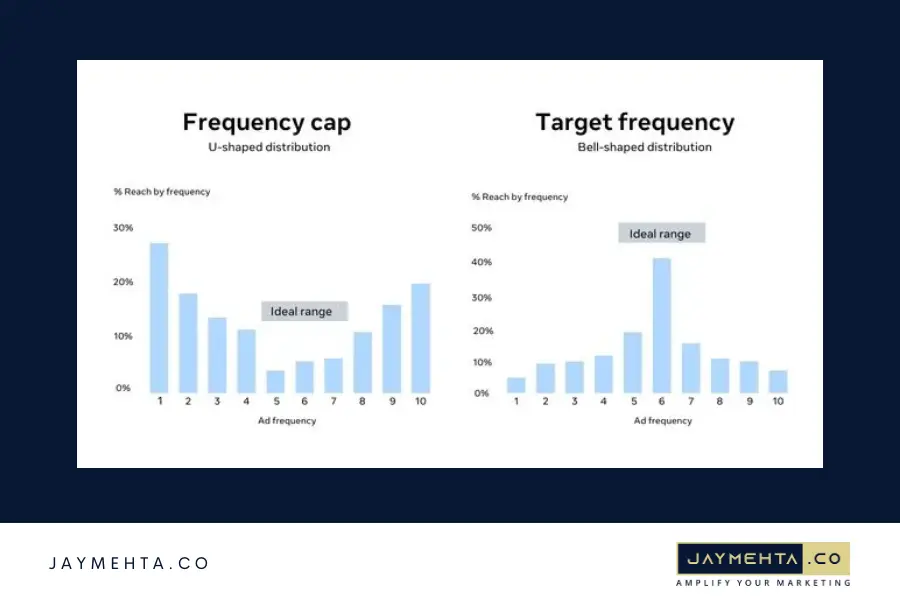
Frequency is the metric that tells this story. Frequency measures how many times, on average, each person has seen your ad. When frequency climbs above three or four, performance typically starts degrading. Above five, you’re in danger zone territory. Above seven or eight, you’re essentially burning money showing ads to people who have already decided they’re not interested. We check frequency metrics immediately because it’s one of the fastest ways to diagnose why a previously successful campaign suddenly stopped working.
Creative age and rotation strategies vary by business, whether it’s the Facebook ads for ecommerce businesses or lead generation but the general principle is constant: fresh creative performs better than stale creative.
Ad format diversity is critical in 2025. If you’re running exclusively static image ads, you’re leaving enormous performance gains on the table. Video content consistently outperforms static images for most objectives because it captures attention better and tells a more compelling story. Carousel ads allow you to showcase multiple products or tell a sequential story. Reels and Stories placements have exploded in usage and often deliver the lowest cost per result. We examine whether you’re taking advantage of the full range of formats available or limiting yourself unnecessarily.
Hook effectiveness in the first three seconds determines whether someone stops scrolling or keeps moving past your ad. The average person spends 1.7 seconds looking at a piece of content on their feed before deciding whether to engage or keep scrolling. That’s not a lot of time. Your ad needs to pattern-interrupt immediately,with a striking visual, an unexpected statement, or a compelling question. We analyze your top-performing ads to understand what’s working and your worst-performing ads to understand what’s failing, and the difference almost always comes down to those first three seconds.
The red flags we encounter consistently include frequency metrics above four or five, which indicates severe ad fatigue and wasted spend. We see the same creative running for six months or longer in about half the accounts we audit. Many businesses allocate one hundred percent of their budget to a single ad format, usually static images, completely ignoring the performance advantages of video and carousel. Not having any video content in your creative rotation in 2025 is a critical miss,video has become table stakes, not a nice-to-have. And text-heavy images that don’t work on mobile are shockingly common, despite the fact that the vast majority of Facebook and Instagram usage happens on mobile devices.
5. Conversion Funnel Optimization
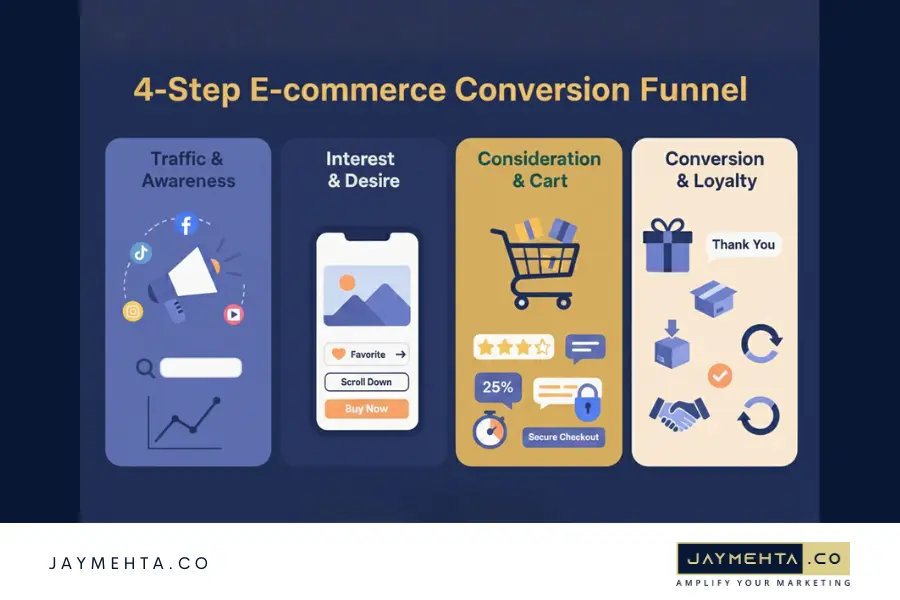
Your ads might be perfect, but if the experience after someone clicks is broken, you’re pouring water into a leaky bucket. We trace the entire customer journey from impression to conversion, looking for the friction points that are causing people to drop off before completing the desired action.
Landing page experience and speed are foundational. Google research shows that as page load time increases from one second to five seconds, the probability of bounce increases by ninety percent. That’s not a typo,ninety percent. If your landing page takes five seconds to load, nine out of ten mobile visitors are leaving before they even see your content. We check page speed immediately because it’s often the single biggest conversion killer in the entire funnel. Tools like Google PageSpeed Insights give us this information in seconds, and the fixes, while sometimes technical, deliver immediate ROI.
Message match between your ad and landing page is psychological optimization. If your ad promises “Get 50% off premium leather jackets,” and the landing page headline says “Welcome to our store,” there’s a disconnect. The visitor experiences cognitive dissonance,they clicked expecting one thing and arrived at something different. Even if the discount is available somewhere on the page, that moment of confusion often leads to an immediate exit. Strong message match means the headline, imagery, and offer on the landing page mirror what was promised in the ad. This seems obvious, but it’s violated surprisingly often, especially in businesses where the marketing team creates ads and the web team controls landing pages without tight coordination.
Mobile optimization deserves its own paragraph because it’s so critical and so often overlooked. Over eighty percent of Facebook and Instagram traffic comes from mobile devices. Yet many landing pages are clearly designed on a desktop and barely function on mobile. Buttons are too small to tap accurately. Forms require excessive typing. Images don’t scale properly. Text is too small to read. If your mobile bounce rate is above seventy percent, there’s almost certainly a mobile experience issue. We test your landing pages on actual mobile devices to see what your customers are seeing, and the problems are usually immediately obvious.
Form friction and checkout process optimization can dramatically improve conversion rates without changing anything about your ads. Every field you ask someone to fill out, every extra page they need to click through, every decision they need to make,each one reduces the percentage of people who complete the process. The principle is called friction, and reducing it is one of the highest-leverage optimizations available. We analyze your forms and checkout process looking for unnecessary steps that can be eliminated or simplified. Do you really need to know their job title to send them an ebook? Does your checkout really need to be spread across five pages? Often, simplifying the conversion process can double conversion rates overnight.
Retargeting strategy for drop-offs is where sophisticated marketers with effective conversion rate optimization strategies’ separate themselves from amateurs. Most businesses treat a lost visitor as lost forever. But the reality is that someone who added a product to cart and didn’t purchase it is vastly more valuable than someone who has never heard of you. They’ve expressed clear intent. They just didn’t convert in that moment for any number of reasons,they got distracted, they wanted to comparison shop, they weren’t ready to make a decision. A proper retargeting strategy brings these high-intent prospects back with reminders, incentives, or additional information. We examine whether you have retargeting campaigns set up for cart abandoners, landing page visitors, video viewers, and other high-intent audiences. If not, you’re leaving money on the table.
6. Bidding Strategy & Budget Efficiency
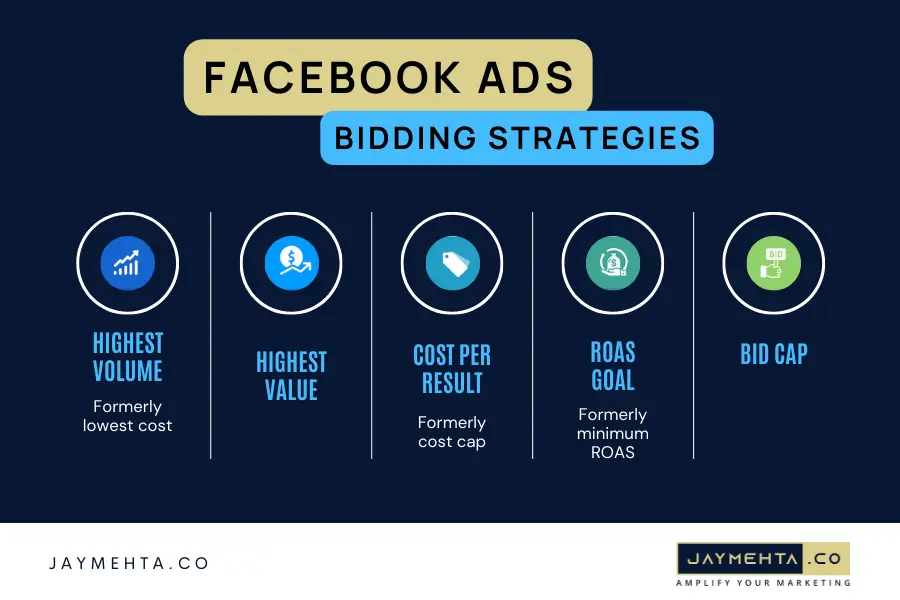
How you bid and how you allocate budget might seem like technical details, but they fundamentally determine whether you’re getting maximum value from every dollar spent. Meta offers several bidding strategies, each optimized for different scenarios, and using the wrong one is like using a screwdriver when you need a hammer,it might eventually work, but it’s inefficient and frustrating.
The choice between Lowest Cost, Cost Cap, and Bid Cap bidding strategies depends on your specific situation. Lowest Cost, which Meta now calls the highest volume strategy, tells the algorithm to spend your entire budget getting as many conversions as possible at whatever cost. This works well when you’re starting out and need to gather data, or when you have a flexible target and just want maximum volume. Cost Cap allows you to tell Meta the maximum you’re willing to pay per conversion on average. This is ideal when you know your acceptable cost per acquisition and want to scale while maintaining profitability. Bid Cap gives you maximum control but requires the most expertise,you’re telling Meta the maximum you’ll bid in any individual auction. We assess which strategy you’re using and whether it aligns with your goals and sophistication level.
The daily versus lifetime budget decision impacts how Meta paces your spending. Daily budgets give you predictable daily spend, which is useful for businesses with cash flow constraints or those wanting to test consistently. Lifetime budgets with a specified date range allow Meta’s algorithm more flexibility to spend when performance is best, which often results in better overall performance. The tradeoff is less predictability. We evaluate which approach makes sense for your business model and goals.
Campaign Budget Optimization, or CBO, is Meta’s approach to letting the algorithm allocate budget across ad sets within a campaign rather than you manually setting budgets for each ad set. When implemented correctly with compatible ad sets, CBO can significantly improve performance because Meta’s algorithm is better at real-time budget allocation than humans can be. However, CBO with incompatible ad sets,like one targeting a warm audience and another targeting cold traffic,can result in all your budget flowing to the easiest conversions rather than the most strategic ones. We check whether you’re using CBO appropriately or whether it’s working against you.
Learning phase disruptions are a massive source of wasted spend that most advertisers don’t understand. Meta’s algorithm needs about fifty conversion events per ad set per week to exit the learning phase and optimize effectively. Every time you make a significant edit to an ad set, changing targeting, creative, or budget by more than twenty percent, it re-enters the learning phase. If you’re constantly tweaking your campaigns, they’re stuck in perpetual learning phase, never optimizing properly. This is why we often see accounts with dozens of edits per week getting worse performance than accounts that make fewer, more strategic changes. We look at your edit history and whether your campaigns are spending enough time in the optimized state versus constantly relearning.
Budget adequacy relative to learning phase requirements is simple math that many advertisers get wrong. If your ad set needs fifty conversions per week to exit the learning phase, and your average conversion rate is two percent with a fifty dollar cost per thousand impressions, you can calculate the minimum budget needed. Many businesses are running ad sets with budgets so small that they mathematically cannot exit the learning phase even if everything else is perfect. We verify that your budgets are sufficient for your goals and adjust recommendations accordingly.
7. Performance Benchmarks & KPI Alignment
The final area we examine is whether you’re tracking the right metrics and how your performance compares to industry standards. We’ve all heard the saying “what gets measured gets managed,” but it’s equally true that measuring the wrong things leads to managing toward the wrong goals.
Cost per acquisition compared to customer lifetime value is the ultimate metric for most businesses. If you spend fifty dollars to acquire a customer who generates thirty dollars in lifetime value, you’re going to go bankrupt no matter how good your click-through rates are. Conversely, if you spend two hundred dollars to acquire a customer who generates one thousand dollars in lifetime value, you’ve built a money printing machine. We examine whether you understand your unit economics and whether your advertising strategy aligns with profitable customer acquisition. Surprisingly often, businesses are optimizing for the wrong target CPA because they haven’t properly calculated their economics.
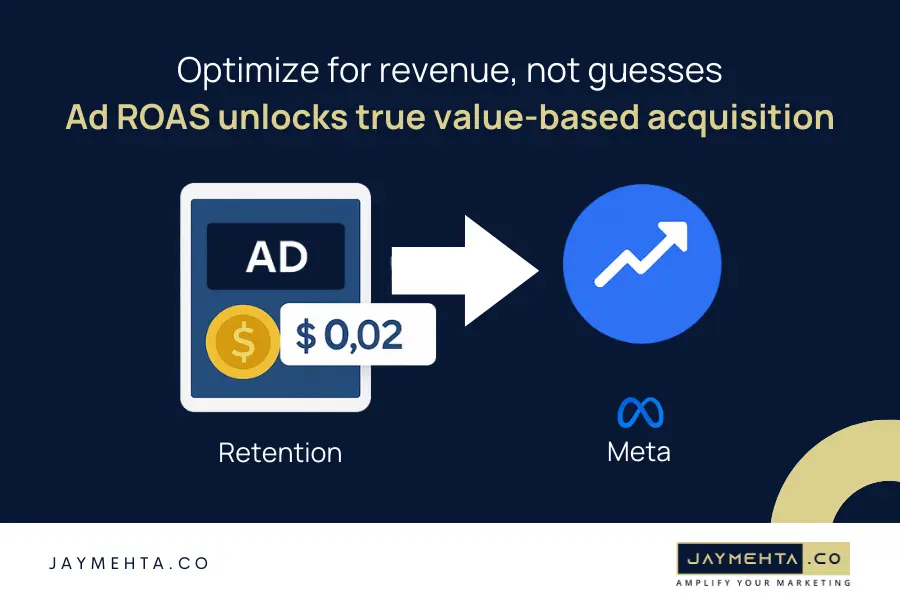
Return on ad spend, or ROAS, is the ratio of revenue generated to ad spend. A three-x ROAS means for every dollar spent on ads, you generated three dollars in revenue. But ROAS is meaningless without context. If your profit margin is fifty percent, a three-x ROAS is excellent. If your profit margin is twenty percent, a three-x ROAS means you’re losing money. We verify that your ROAS targets account for your actual cost structure, including product costs, fulfillment, overhead, and desired profit margin. Setting appropriate ROAS targets is the difference between profitable growth and revenue growth that’s actually destroying the business.
Click-through rate is often overvalued by inexperienced advertisers. A high CTR feels good,it means people are interested in your ad, but it’s a means to an end, not the end itself. We’ve seen campaigns with one percent CTR that are wildly profitable and campaigns with five percent CTR that lose money on every conversion. CTR matters insofar as it affects your overall cost per acquisition, but optimizing for CTR alone without considering conversion rate is optimizing the wrong part of the funnel.
Conversion rate is where the landing page meets the traffic. A good conversion rate indicates strong message-market fit and an effective landing page experience.
Our Rapid Diagnosis Process: The 15-Mins Framework
After conducting thousands of these health checks, we’ve developed pattern recognition that allows us to diagnose accounts faster than would seem possible. Here’s exactly how we complete the health check in under 15 minutes.
Part 1: Structure & Budget Health (0:00 – 3:00)
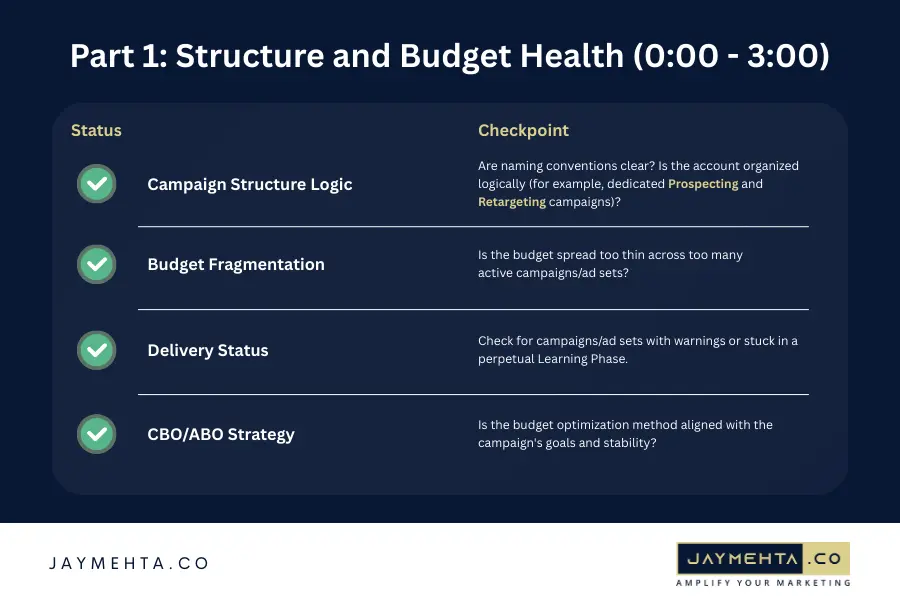
- Campaign Structure Logic: Are naming conventions clear, and is the structure logical (e.g., separating Prospecting/Retargeting)?
- Budget Fragmentation: Is the budget spread too thin across too many active campaigns/ad sets?
- Delivery Status: Check for campaigns/ad sets with warnings or stuck in a perpetual Learning Phase.
- CBO/ABO Strategy: Is the budget optimization method aligned with the campaign’s goals and stability?
Part 2: Tracking & Data Quality (3:00 – 6:00)
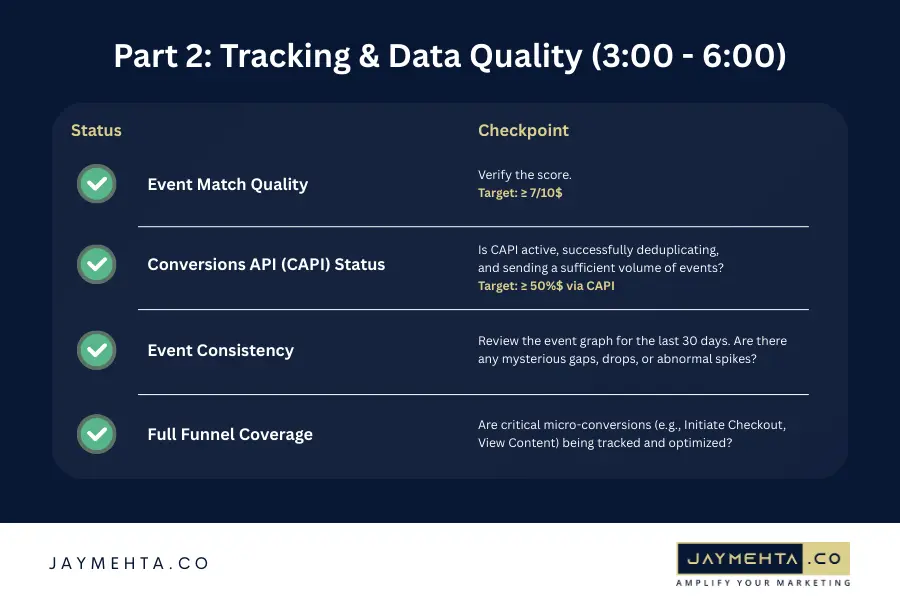
- Event Match Quality: Verify the score. Target: ≥ 7/10$.
- Conversions API (CAPI) Status: Is CAPI active, successfully deduplicating, and sending a sufficient volume of events? Target: ≥ 50%$ via CAPI.
- Event Consistency: Review the event graph for the last 30 days. Are there any mysterious gaps, drops, or abnormal spikes?
- Full Funnel Coverage: Are critical micro-conversions (e.g., Initiate Checkout, View Content) being tracked and optimized?
Part 3: Performance, Audience & Creative (6:00 – 11:00)
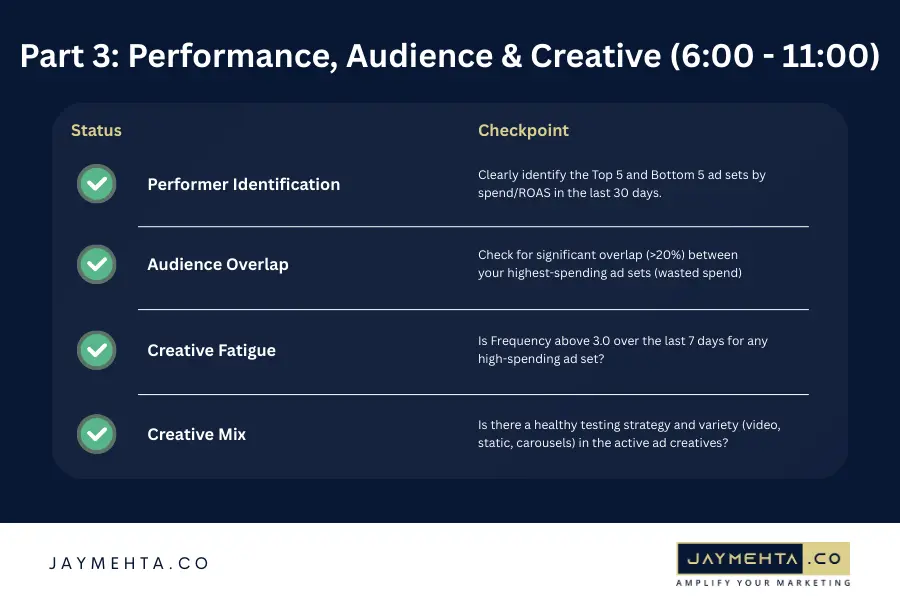
- Performer Identification: Clearly identify the Top 5 and Bottom 5 ad sets by spend/ROAS in the last 30 days.
- Audience Overlap: Check for significant overlap (>20%) between your highest-spending ad sets (wasted spend).
- Creative Fatigue: Is Frequency above 3.0 over the last 7 days for any high-spending ad set?
- Creative Mix: Is there a healthy testing strategy and variety (video, static, carousels) in the active ad creatives?
Part 4: Trend Analysis & Action Plan (11:00 – 15:00)
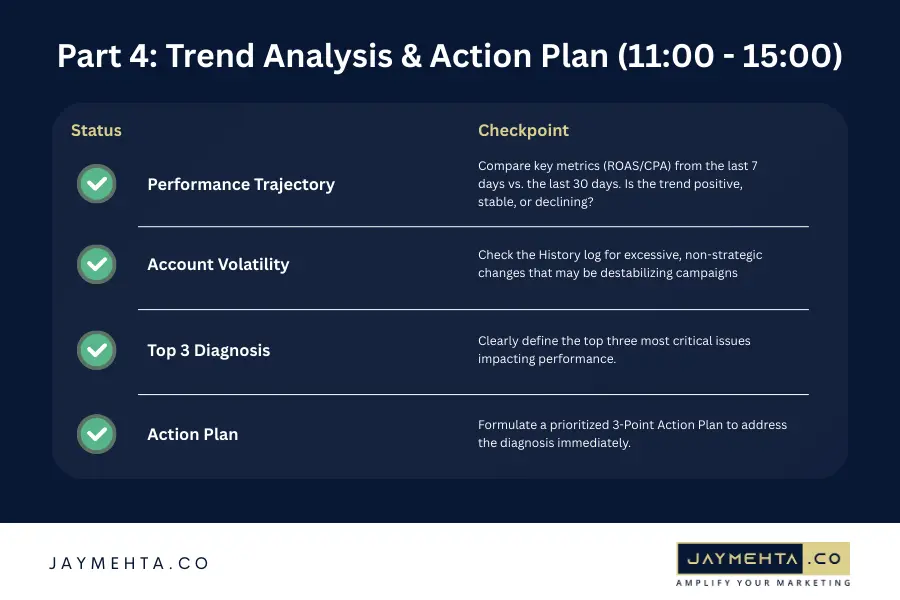
- Performance Trajectory: Compare key metrics (ROAS/CPA) from the last 7 days vs. the last 30 days. Is the trend positive, stable, or declining?
- Account Volatility: Check the History log for excessive, non-strategic changes that may be destabilizing campaigns.
- Top 3 Diagnosis: Clearly define the top three most critical issues impacting performance.
- Action Plan: Formulate a prioritized 3-Point Action Plan to address the diagnosis immediately.
Conclusion: The Competitive Advantage of Systematic Optimization
After twenty years in digital marketing and analyzing thousands of Meta ad accounts, I can confidently say that the difference between businesses that succeed with paid social and those that struggle isn’t creativity, budget size, or even product quality. It’s a systematic optimization discipline.
The businesses that consistently achieve three, four, or five-x return on ad spend aren’t lucky. They haven’t found a secret targeting hack that others don’t know about. They haven’t discovered magical ad copy formulas. What they have is disciplined systems for monitoring performance, diagnosing issues quickly, and implementing fixes before small problems become expensive disasters.
Our 15-Minutes Meta Ad Health Check exists because speed matters in a rapidly evolving platform. The businesses that can identify and fix issues within days outperform those that take weeks or months to diagnose the same problems. This isn’t about being perfect,it’s about being fast enough that your mistakes don’t compound into catastrophes.
Meta advertising is simultaneously one of the most powerful and most unforgiving advertising platforms ever created. When configured correctly with proper tracking, strategic targeting, fresh creative, and adequate budget, it can profitably scale businesses faster than almost any other channel. When configured incorrectly with broken tracking, audience overlap, fatigued creative, and fragmented budgets, it can burn through thousands of dollars while delivering minimal results.
The platform doesn’t care about your intent or effort. It only responds to correct configuration. That’s why systematic health checks matter. They’re the difference between hoping your ads work and knowing they work. They’re the difference between gradually declining performance and continuous improvement. They’re the difference between advertising being an expense you tolerate and an investment that scales your business.
If you’re spending money on Meta advertising and you’re not conducting regular health checks, you’re almost certainly leaving money on the table. The question isn’t whether you have optimization opportunities,the question is how much they’re costing you every day you don’t identify and fix them.
Ready for Your 15-Minutes Meta Ad Health Check?
At Jay Mehta Digital, we’ve spent over twenty years becoming the digital marketing specialist and analyzed thousands of ad accounts to develop our rapid diagnostic framework. We can identify your top three to five performance issues in under 15 mins and provide you with a prioritized action plan within twenty-four hours.
Here’s what we need to get started:
- Admin access to your Meta Ads Manager so we can review campaign structure, performance data, and tracking setup
- Your current ROAS and your target ROAS so we understand what success looks like for your business
- Your average order value for e-commerce businesses or customer lifetime value for lead generation businesses so we can benchmark your results appropriately
- Any specific concerns or questions you have about your current Meta advertising performance
Within 15 minutes of accessing your account, we’ll complete our diagnostic assessment. Within twenty-four hours, you’ll receive a detailed action plan prioritized by impact and implementation difficulty. Within one week, you can begin seeing improved performance from implemented fixes.
The cost of not knowing what’s broken in your ad account compounds every single day. Stop guessing about why your Meta ads aren’t performing and get the answers you need to fix them.
Contact Jay Mehta Digital today to schedule your 15 -Minutes Meta Ad Health Check Call and discover exactly what’s holding your campaigns back.